Oh, no, not that song again. And here we go on another ride, following Bjarke Ingels himself as he pedals furiously through the Danish Pavilion. We just don’t seem to get enough of it. But, look! No helmet! How very uneuropean of you, Mr. Bjarke!
Don’t miss this and other videos on BIG’s channel @ Vimeo. Via Archinect.
I don't think sustainability is a design aesthetic, any more than having electricity in your building, or telephones, or anything else. It's an ethic, a basic consideration that we have to have as architects designing buildings. (…) in 10 years we're not going to talk about sustainability anymore, because it's going to be built into the core processes of architecture.
About a couple of months ago Bob Borson referenced me in one of his ever motivating posts as he contemplated the blogger’s million dollar question: How big is your blog? I’ve been wanting to give Bob some feedback on that topic but my life being crazy as it usually is, this time with a car crash in the middle to make things even more complicated, it’s been hard to get my thoughts together to write what I wanted to say. So, a bit late but still, here goes…
Bob started his blog – Life of an Architect – in January this year. If you haven’t visited it yet, you should. There’s some really great stuff going on there, not only because he is a truly diligent and prolific blogger but also because, as it turns out, he has very interesting friends as well. I’ve been thoroughly enjoying those guest articles although I would never make Bob’s mistake of letting my own wife write a post. Oho…
Anyways, just recently one of Bob’s friends, Derek Leavitt, wrote this interesting set of Rules for an Architect’s blog. It kind of goes full circle with his original post since writing a successful blog is about finding balance between what attracts readers and what makes the experience fulfilling to yourself. So, most likely quoting Mr. Miyagi, a personal blog is all about finding your own balance. And therefore the original question then becomes something like…
How big is big enough?
I started my own blog in December 2003. Now that’s a long time because, as we all know, blog years are like dog years. This blog has gone through many mutations and I’ve certainly made all sorts of mistakes in the process. But a couple of years ago I was making it big for an architecture-related blog, hitting the thousand daily visitors mark. Yep, those were the days because, for several different reasons, nowadays that average has been cut in half. And that’s okay.
Let me be honest about it. I’m not saying I’m happier for that fact. What I mean is that I’ve been trying to find that sense of balance, to find the reasons that drive my need to write a personal blog. And to me it has become a mixture of interrogations: who I’m writing to and who I’m trying to connect with. And the latter part of this equation really is a great measure of what makes a successful blog. Who are you reaching through the web? Who is tracking what you write and what feedback are you getting from it?
That has become a far more important measure of success than the single number of visitors one gets on a daily basis. And so I have come to realize that I’m trying to reach people who share similar interrogations, on architecture and life in general, and although I’ve been loosing ground on my home base of readers, the world map has been lighting up on my Analytics account. And it feels great.
As I face this new stage of my blogging experience, going through the set of rules outlined by Derek certainly makes a lot of sense to me. At the core of it lies the importance of humanizing the writing process. Simply put: be honest, be different. Share what you know. Share what you don’t know. A personal blog doesn’t have to be about yourself but it should be about your own vision, your doubts and your ideas. That’s what makes it universal, no matter where you are.
And if you stick to it, and keep learning and growing, people will come from all parts of the world. And in this nebulous landscape of the digital web, you will matter.
You don’t need to travel to Shanghai to get a glimpse of the Danish Pavilion with this incredible time-lapse rollercoaster. When you’re finished, don’t forget to watch the UK Pavilion as well: here and here.


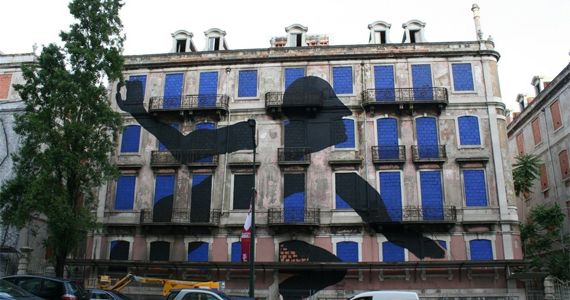
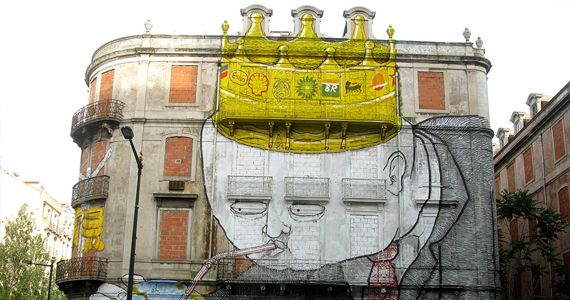
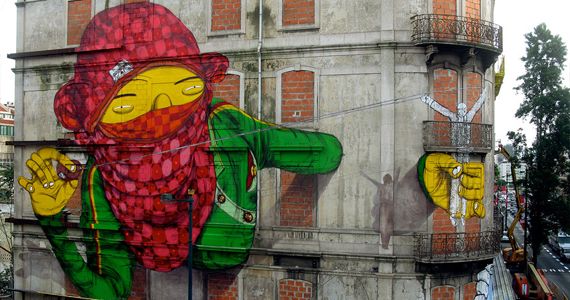
Fragments of otherwise dormant urban fabric are brought to life by these eccentric figures. Sam3 (Spain), Os Gémeos (Brasil) and Blu (Italy) passed through Lisbon and left some inspired paintings on the walls of a couple of abandoned buildings. There are many of images to see on the web, just check the following links to get the idea: Stick2Target, Unurth, L (Flickr). Via Horizonte Artificial, People and Place.

NEXT: Collective Housing in Progress is the latest book from a+t architecture publishers.
As the long established correlation between urban growth and economic development is becoming increasingly questioned, in the aftermath of a global economic crisis, architecture is looking into the processes that determine the ever changing built environment with renewed interest. Every act of architecture carries the possibility of transformation of its external reality. In this unfolding debate, collective housing once again claims its central role in the balance between the autonomous building and the world that surrounds it.
NEXT: Collective Housing in Progress, questions the programmatic complexity of contemporary architecture in its utmost urban implications. Although remarkably different in their approach, the projects now featured in this book carry the strong attempt to preserve the social qualities of architecture in a mutating economic environment. Variables like density, energy efficiency, transportation costs, new structures of technology and communications, all come into play in a conscious effort to redefine public life within the city. These are projects that seek to refill and regenerate the urban landscape, proposing programmatic indetermination, integration of social and cultural spaces, flexibility of uses and, ultimately, a call to intensity beyond density.
NEXT is the latest book from a+t’s Density series, featuring 30 European and American projects designed by 29 different young architectural practices, fully illustrated, detailed and analyzed through technical drawings and schematic diagrams. Visit a+t for additional information on this and other publications.
Atelier Data + MOOV: Forwarding Dallas, Dallas, United States, 2009-2012.
REX: Low2No, Helsinki, Finland, 2009.

Modostudio: Kilpailuohjelma, Lohja, Finland, 2008.

AllesWirdGut: Herzberg Public Housing, Vienna, Austria, 2007-2010.

Atelier Zündel & Cristea: Rue de Charenton Residences, Paris, France, 2007-2010.
This feature is currently unavailable.
A directory of portuguese architects.
Portuguese language blogs.
A selection of blogs I read on a regular basis.
Do you feel lucky?
Happy browsing...
December 2003 January 2004 February 2004 March 2004 April 2004 May 2004 June 2004 July 2004 August 2004 September 2004 October 2004 November 2004 December 2004 January 2005 February 2005 March 2005 April 2005 May 2005 June 2005 July 2005 August 2005 September 2005 October 2005 November 2005 December 2005 January 2006 February 2006 March 2006 April 2006 May 2006 June 2006 July 2006 August 2006 September 2006 October 2006 November 2006 December 2006 January 2007 February 2007 March 2007 April 2007 May 2007 June 2007 July 2007 August 2007 September 2007 October 2007 November 2007 December 2007 January 2008 February 2008 March 2008 April 2008 May 2008 June 2008 July 2008 August 2008 September 2008 October 2008 November 2008 December 2008 January 2009 February 2009 March 2009 April 2009 May 2009 June 2009 July 2009 August 2009 September 2009 October 2009 November 2009 December 2009 January 2010 February 2010 March 2010 April 2010 May 2010 June 2010 July 2010 August 2010 September 2010 October 2010 November 2010 December 2010 January 2011 February 2011 March 2011 April 2011 May 2011 June 2011 July 2011 August 2011 September 2011 October 2011 November 2011 December 2011 January 2012
The architecture blog A Barriga de um Arquitecto / The Belly of an Architect (written in bilingual Portuguese-English) is mainly focused on contemporary architecture and urban design, covering recent works from Portuguese architects as well as projects of international significance.
My name is Daniel Carrapa. I was born in Lisbon, Portugal, in 1973. I’m an architect living in Évora, a nice historical town that was included in the World Heritage List by UNESCO in 1986. I’m married, have 4 cats – Matilde, Patanisco, Olivia, Lisa – and 1 dog – Moby. Moby is a three-legged dog. He’s okay. I graduated as an architect in 1996 (FAUTL Lisbon Faculty of Architecture). I am also an authority on cat litter and will provide expert advice upon request. I love traveling, watching movies, reading books and draining the battery from my X360 gamepad. In my lifetime I have visited the following countries: India, Nepal, China (Hong-Kong and Macau), Greece, Spain, France, Italy, Austria, Hungary, Poland, Czech Republic, Germany and the Netherlands.
I love feedback, so feel free to drop me a line to abarrigadeumarquitecto@ gmail.com or meet me on Google+. I'm also registered on Twitter and Facebook but I don't use them as much.
This blog is published under a Creative Commons license.
Subscribe to this blog's content feed.
Established Dec. 2003. Thank you for stopping by.