![[a barriga de um arquitecto]](https://blogger.googleusercontent.com/img/b/R29vZ2xl/AVvXsEh4jxSFgS7aN5np9gNAv5D6FLs8GihH_1lu1XrTdi7CmZ6DwtdH1DQ7u6RQnN6SosH_HFrY3YQzoLlvzBeEK-cxh0dveIqPEsEC661K_iPUh0NifbNNN-mRoy6nVc0ycEi972Llyg/s1600/bA_LOGO_MOCHA_2016_650.jpg)


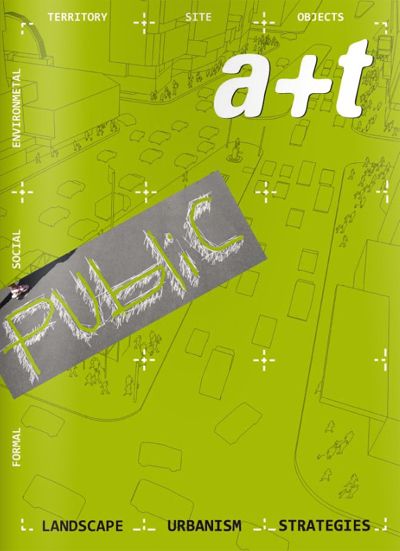
Strategy Public: Landscape Urbanism Strategies is a new book from a+t architecture publishers. This post is available in English.
STRATEGY PUBLIC dá início a uma nova série no catálogo de livros de arquitectura da a+t. Apesar de deter algumas semelhanças com o estilo visual da anterior publicação desta editora, o manual de análise urbana intitulado THE PUBLIC CHANCE, este último livro aborda o tema das estratégias de projecto – a relação estreita entre as manifestações de arquitectura e o conjunto de objectivos que estão na base da sua conceptualização.
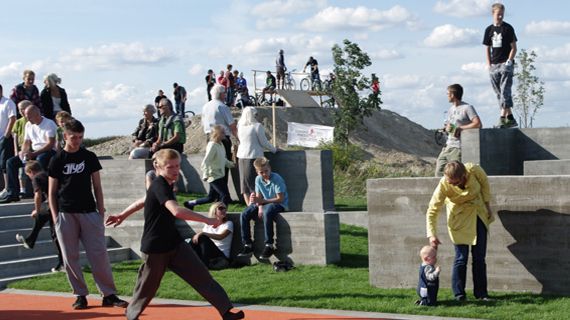
Kragh & Berglund, Plug’N’Play, Ørestad South, Copenhagen, Denmark, 2008.
É uma abordagem pouco usual considerando os padrões editoriais, mais convencionais, de investigação e análise de arquitectura. O projecto final é usualmente entendido como o ponto de partida para a busca de significado teórico. Aqui somos confrontados com um modelo de investigação diverso: o escrutínio das estratégias que antecedem o processo de desenho, procurando clarificar as carências, os propósitos e as metodologias seguidas, com vista a traduzir conceitos abstractos em soluções práticas.
STRATEGY PUBLIC apresenta assim um vislumbre sobre aspectos pouco reflectidos na discussão crítica da arquitectura, tendo em conta os diversos planos de intervenção que com ela interferem: económico, social, ambiental. O primeiro passo nesta investigação é formulado sobre os objectivos e as considerações programáticas. São igualmente analisados os factores exteriores tais como as especificidades do sítio, preocupações de sustentabilidade, as particularidades dos utilizadores, as restrições orçamentais e, finalmente, o modo como todos eles se tornam determinantes no desenvolvimento da solução.
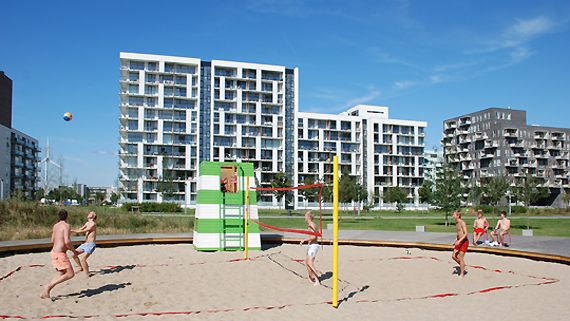
Mutopia, City Park, Ørestad, Copenhagen, Denmark, 2005-2008.
Mais de 20 obras de arquitectura paisagista e design urbano estão representadas neste livro, sendo cada uma delas analisada em função das suas estratégias particulares e do resultado final. Trata-se do livro mais detalhado da a+t, contendo desenhos técnicos meticulosos e diagramas informativos que pormenorizam cada aspecto da sua construção.
Em alguns projectos encontramos a necessidade de reinterpretar o território existente, adaptar superfícies, introduzir novos materiais ou explorar soluções de iluminação inventivas. Outros abordam a necessidade de conectar ou activar espaços intersticiais, introduzir novas funções e temas ou lidar com questões sensíveis como a gestão de percursos de drenagem pluvial ou de áreas de plantação. Estes podem variar desde operações ambiciosas, de larga escala, a projectos que lidam com questões mais prosaicas como cortes financeiros ou a necessidade de reutilizar materiais e estruturas existentes.
A cuidadosa selecção e diversidade de exemplos é, afinal, aquilo que torna STRATEGY PUBLIC numa ferramenta de aprendizagem tão surpreendente, sendo também um valioso manual de recursos de design e metodologias de projectar, um livro que todos aqueles que trabalham sobre espaço público devem ter em consideração.
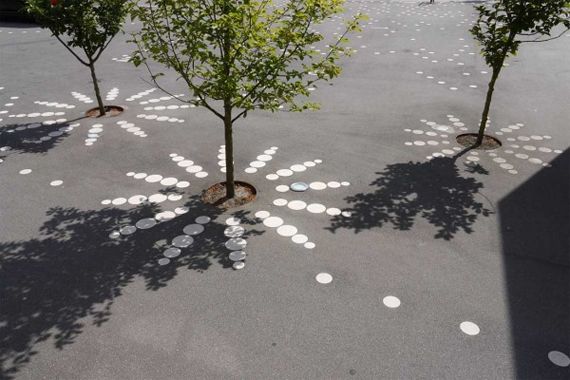
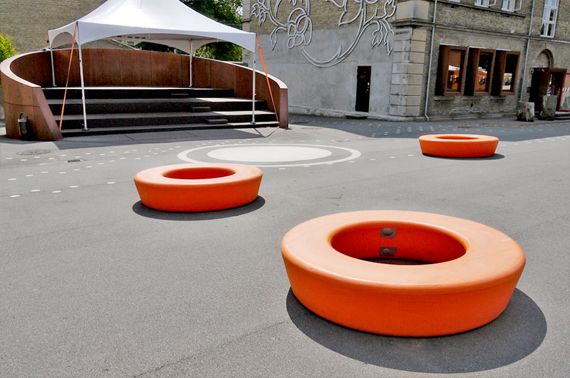
Kristine Jensens, Nicolai Cultural Centre Courtyard, Kolding, Denmark, 2007.
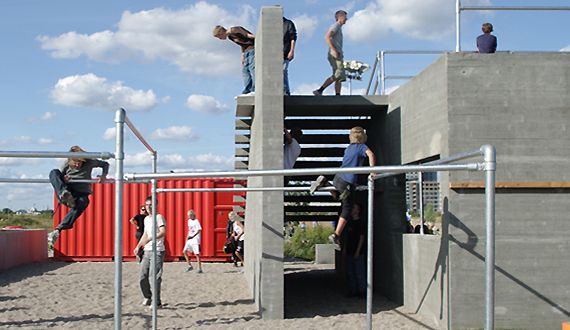
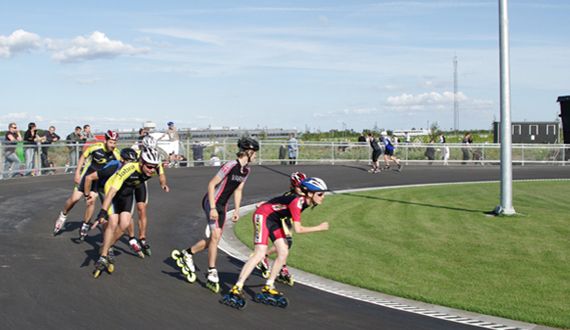
Kragh & Berglund, Plug’N’Play, Ørestad South, Copenhagen, Denmark, 2008.
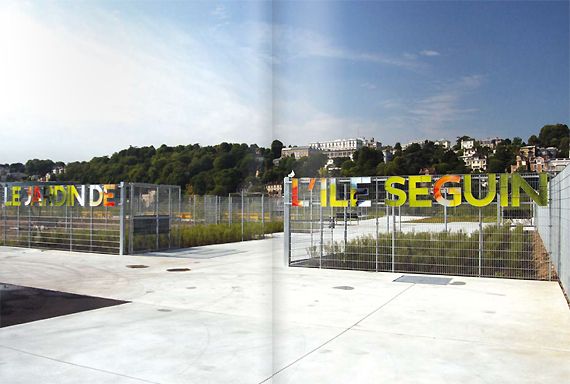
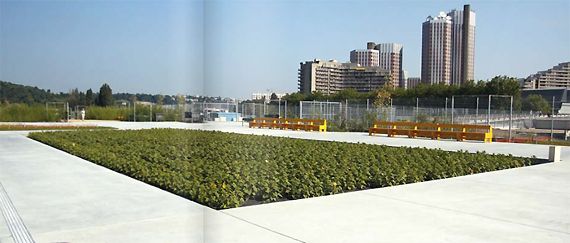
Michel Desvigne, Seguin Island Gardens, Paris, France, 2010.
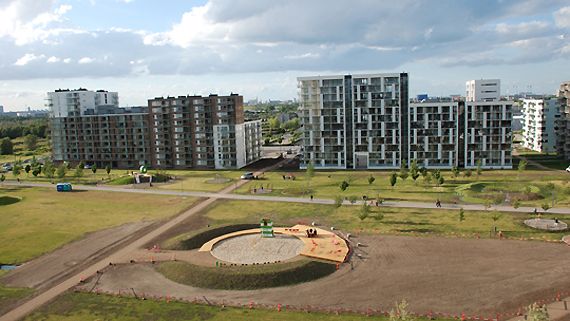
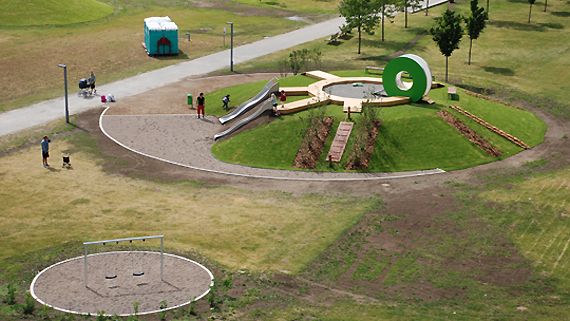
Mutopia, City Park, Ørestad, Copenhagen, Denmark, 2005-2008.
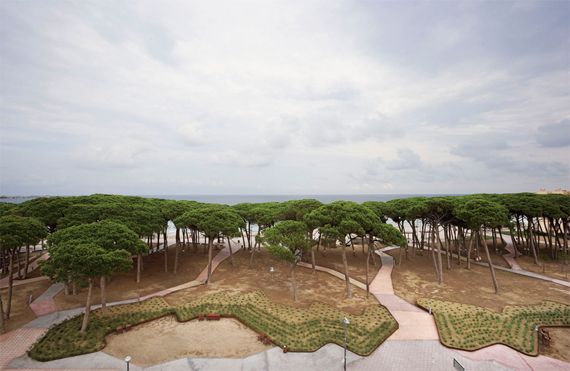
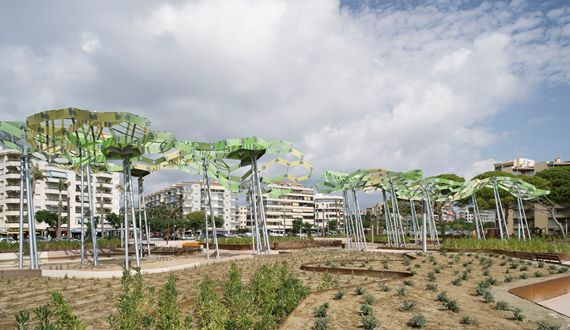
Arteks, Perruquet Beach Park, Vila-Seca, Spain, 2009.
¶ English / Click to expand. [+/-]
STRATEGY PUBLIC opens a new series in a+t’s architectural catalogue. Although it follows a visual and diagrammatic style similar to their previous publication, the noteworthy urban landscape analysis guide titled THE PUBLIC CHANCE, this latest book is more focused on the subject of project design strategies – the fine balance between architectural manifestations and the primary set of objectives that guide their creation.
It’s an unusual approach considering other forms of conventional theoretical research. The finished project is often the critical starting point in the search for meaning. Here we are confronted with an alternate investigation method: an attempt to scrutinize the strategies that precede the design process. To understand the methodologies through which concepts are put into practice. STRATEGY PUBLIC offers an outlook into different planes of intervention: economic, social, environmental, formal. It starts by inquiring project objectives, from the seminal programmatic considerations to the concepts through which these are translated into form. Additionally, external factors are taken into consideration – such as the specificities of the site, the ecological concerns, the target users, the financial constraints of the operation – and the ways these become determinant to the development of the project.
More than 20 built works of urban design and landscape architecture are represented and each one of them is analysed regarding these particular strategies and their subsequent conceptual outcome. This is definitely a+t’s most detailed book to date, containing meticulous technical drawings and informative diagrams that dissect every single project. Some address the need to reinterpret existing landscapes, to adapt surfaces, introduce new materials and explore inventive lighting solutions. Others are focused on the need to connect and activate interstitial spaces, to introduce new functions and themes or deal with sensitive issues such as rainwater and plantation management. These may range from ambitious, large scale operations, to projects that deal with more prosaic considerations such as spending cuts or the need to reuse pre-existing materials and structures. The careful selection and diversity of examples is ultimately what makes STRATEGY PUBLIC such an outstanding learning tool and a unique design resource manual, a book that every urban designer and landscape architect should definitely take into consideration.
It’s an unusual approach considering other forms of conventional theoretical research. The finished project is often the critical starting point in the search for meaning. Here we are confronted with an alternate investigation method: an attempt to scrutinize the strategies that precede the design process. To understand the methodologies through which concepts are put into practice. STRATEGY PUBLIC offers an outlook into different planes of intervention: economic, social, environmental, formal. It starts by inquiring project objectives, from the seminal programmatic considerations to the concepts through which these are translated into form. Additionally, external factors are taken into consideration – such as the specificities of the site, the ecological concerns, the target users, the financial constraints of the operation – and the ways these become determinant to the development of the project.
More than 20 built works of urban design and landscape architecture are represented and each one of them is analysed regarding these particular strategies and their subsequent conceptual outcome. This is definitely a+t’s most detailed book to date, containing meticulous technical drawings and informative diagrams that dissect every single project. Some address the need to reinterpret existing landscapes, to adapt surfaces, introduce new materials and explore inventive lighting solutions. Others are focused on the need to connect and activate interstitial spaces, to introduce new functions and themes or deal with sensitive issues such as rainwater and plantation management. These may range from ambitious, large scale operations, to projects that deal with more prosaic considerations such as spending cuts or the need to reuse pre-existing materials and structures. The careful selection and diversity of examples is ultimately what makes STRATEGY PUBLIC such an outstanding learning tool and a unique design resource manual, a book that every urban designer and landscape architect should definitely take into consideration.
Sem comentários:
Enviar um comentário